
Learn
Duo, trio, quartet - who's actually on stage?
Chamber music is defined by its size: a handful of players, one to a part, no conductor. The combinations have names - and the quickest way to learn them is to meet a few. AFCM's Pathways Program is full of them.
Meet AFCM's Pathways ensembles
AFCM's Pathways Program nurtures the next generation of Australian chamber musicians - coaching, main-stage performances and regional touring for emerging ensembles, supported by the Ian Potter Foundation. Three of them are the perfect way to meet the three shapes you'll hear most.
Cedar Quartet
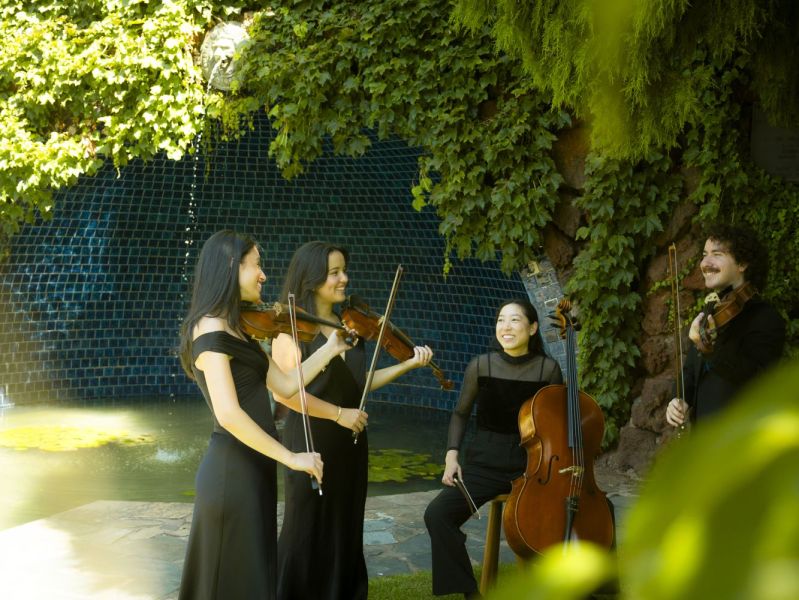
Melbourne's Cedar Quartet - two violins, a viola and a cello: the classic chamber line-up, and the sound most people picture first. You may have caught them up close at an AFCM pop-up on the Cairns Esplanade.
Orpheus Quintet
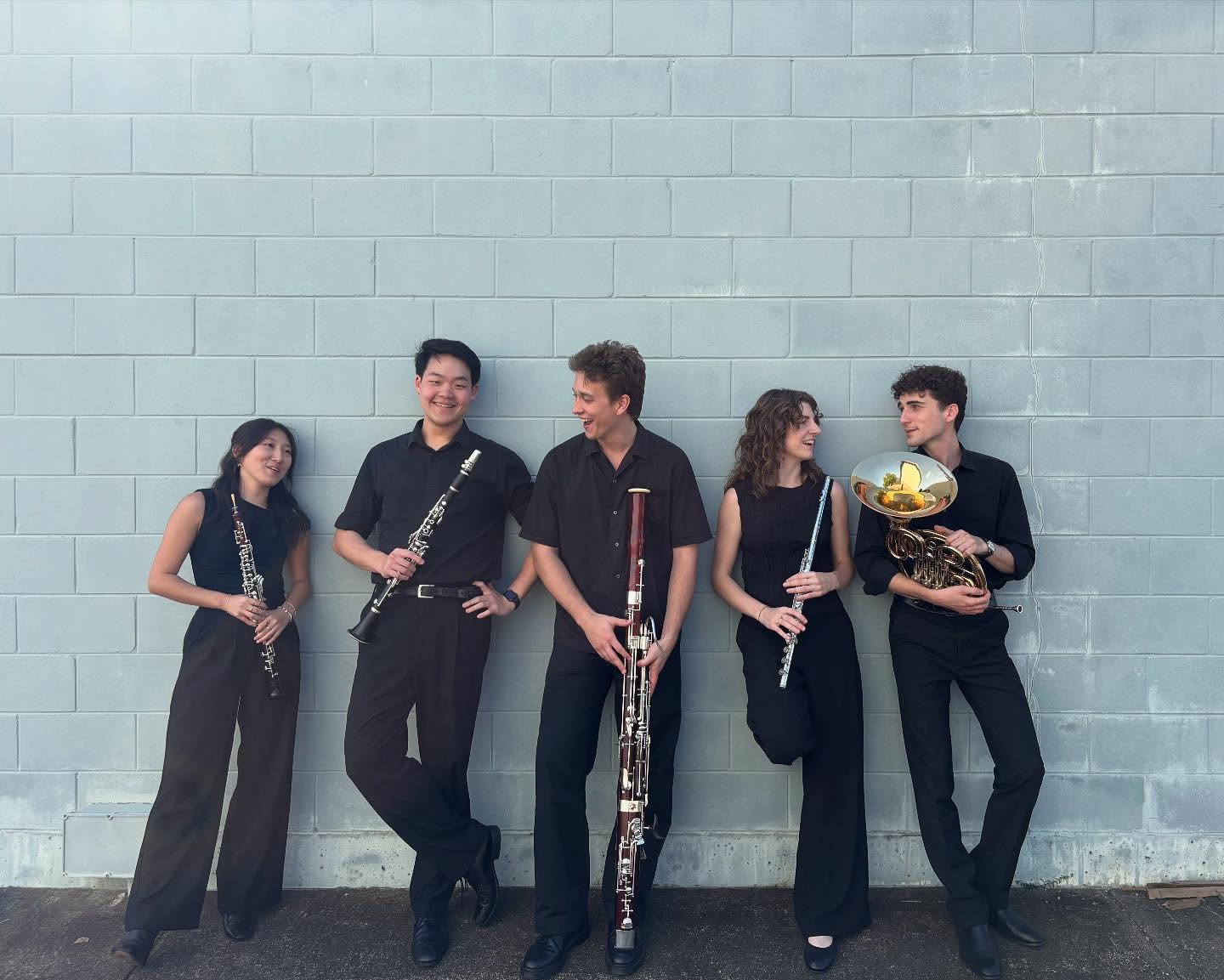
Sydney's Orpheus Quintet were AFCM's 2026 Fellowship Ensemble - five wind players, a warmer, breathier cousin of the string group. They toured regional Queensland, played the main stage, and premiered brand-new Australian works written for them through AFCM's Emerging Composers Initiative.
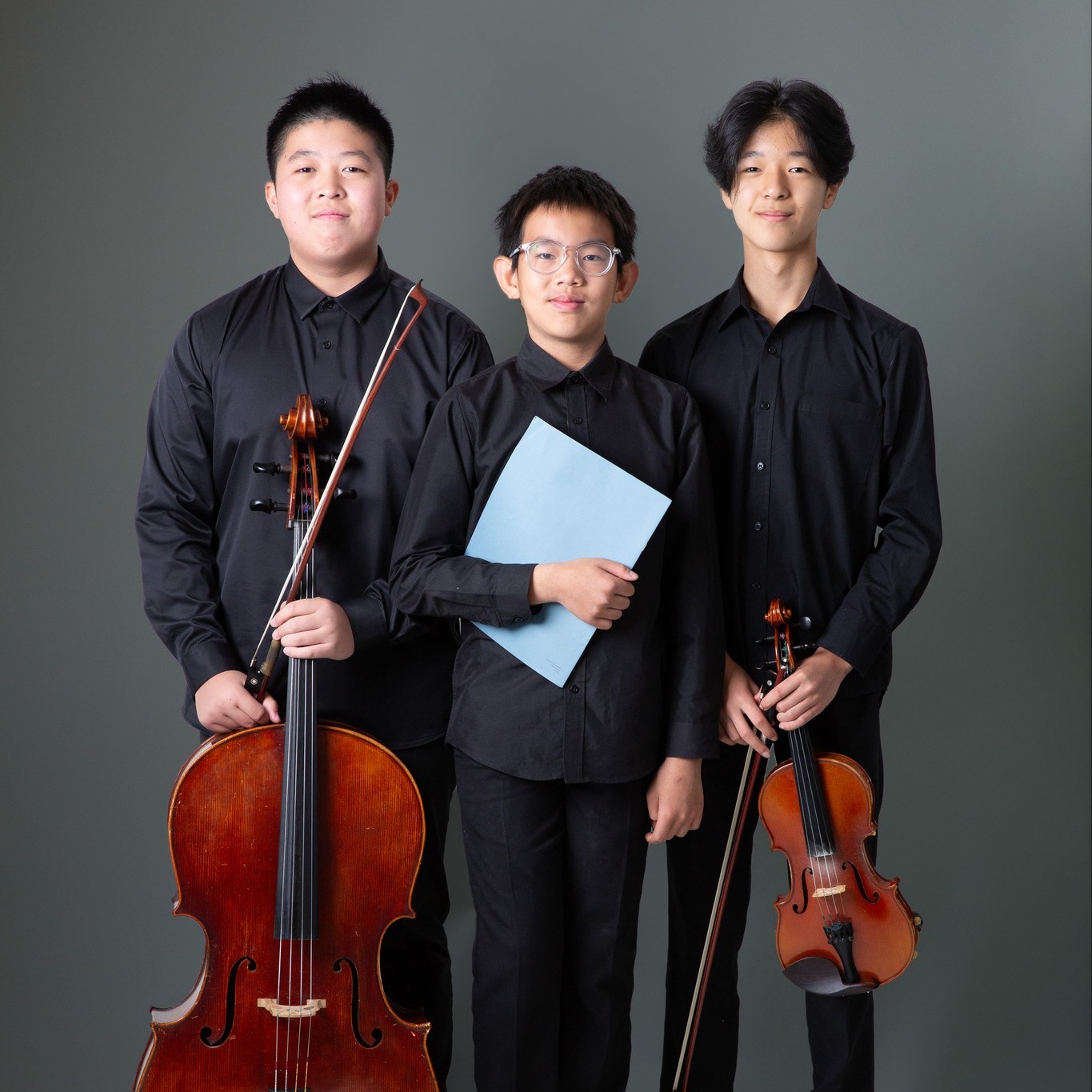
Kingussie Trio
Victoria's Kingussie Trio won First Prize at Musica Viva's 2026 Strike A Chord and join the AFCM 2027 Pathways Program, with an album to record for ABC Classic. A piano trio pairs the piano with two string voices - one of the richest small-ensemble combinations there is.
The other shapes chamber music comes in
A quick glossary - with a few examples from AFCM's 2026 festival.
Two players, often an instrument with piano (a violin sonata, say) - or, as in Gideon Klein's Duo for Violin and Cello, two strings alone. AFCM 2026 paired violinist Alexandra Raikhlina with cellist Charlotte Miles for it. The most intimate format of all.
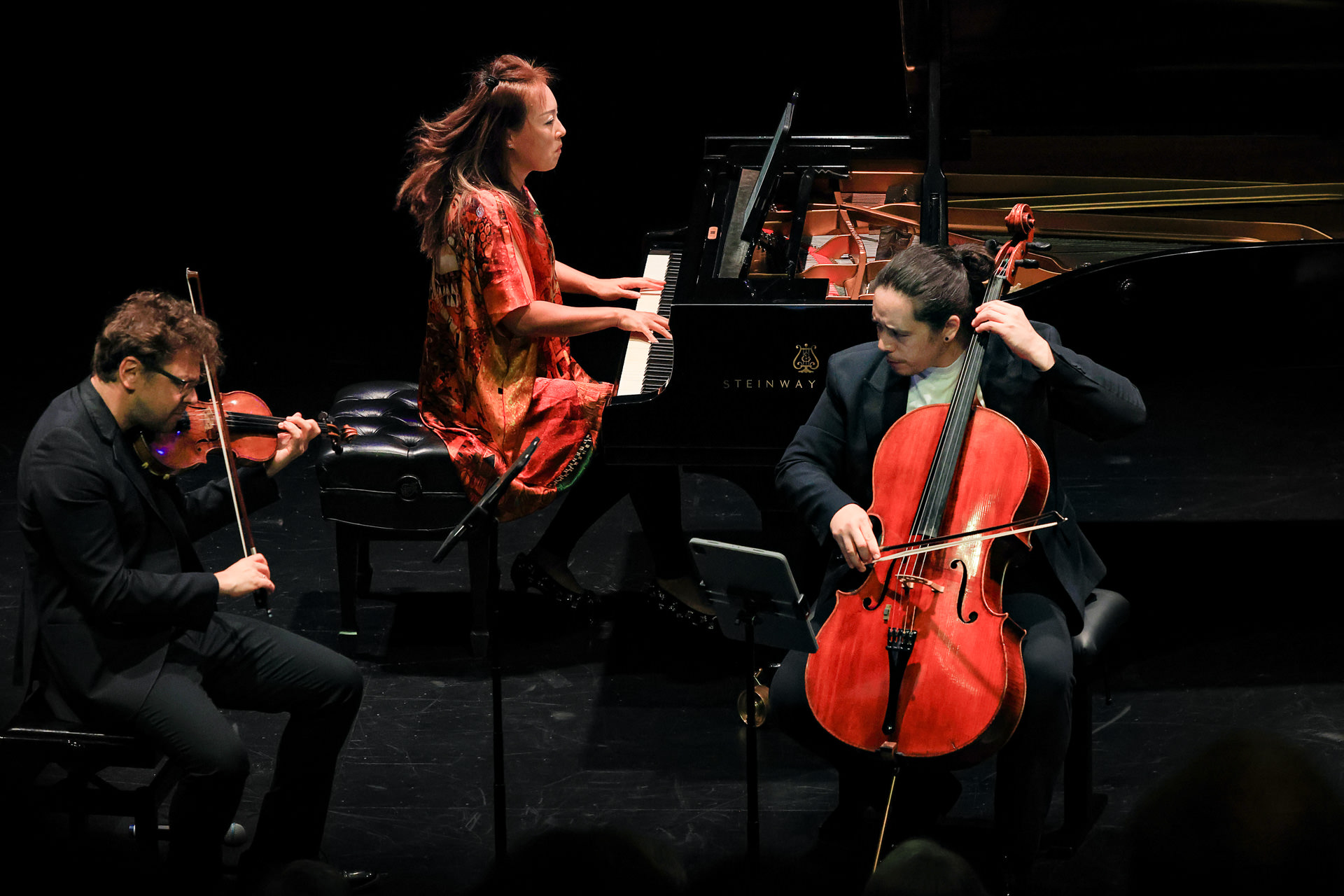
Three players. The piano trio (violin, cello, piano) is the most common - Alexander Sitkovetsky, Isang Enders and Qian Wu played Mendelssohn's Piano Trio No. 2 at AFCM 2026, in the same tradition as the Kingussie Trio above. A string trio swaps the piano for a viola: violin, viola and cello..
Two violins, viola and cello: the cornerstone of the repertoire. You met one above in the Cedar Quartet.
Add a piano to a string trio and you have a piano quartet - Dene Olding, Benjamin Roskams, Christian-Pierre La Marca and Kristian Chong played Mahler's for exactly that line-up at AFCM 2026. Add it to a string quartet and you have a piano quintet: 2026 premiered Lee Bradshaw's new piano quintet completing an unfinished work by a composer lost in the Holocaust, performed by Alexandra Raikhlina, Jack Liebeck, Stefanie Farrands, Charlotte Miles and Alexander Krichel
Flute, oboe, clarinet, bassoon and horn - five distinct voices, as with the Orpheus Quintet.
A string quartet plus one extra - usually a second viola or a second cello - for a fuller, warmer sound. AFCM's 2026 Governor's Gala opened with Elgar's Cello Concerto arranged for cello and string quintet: Timo-Veikko Valve as soloist with Phoebe Russell, Caroline Henbest, Jack Liebeck, Charlotte Miles and Cedar-Rose Newman.
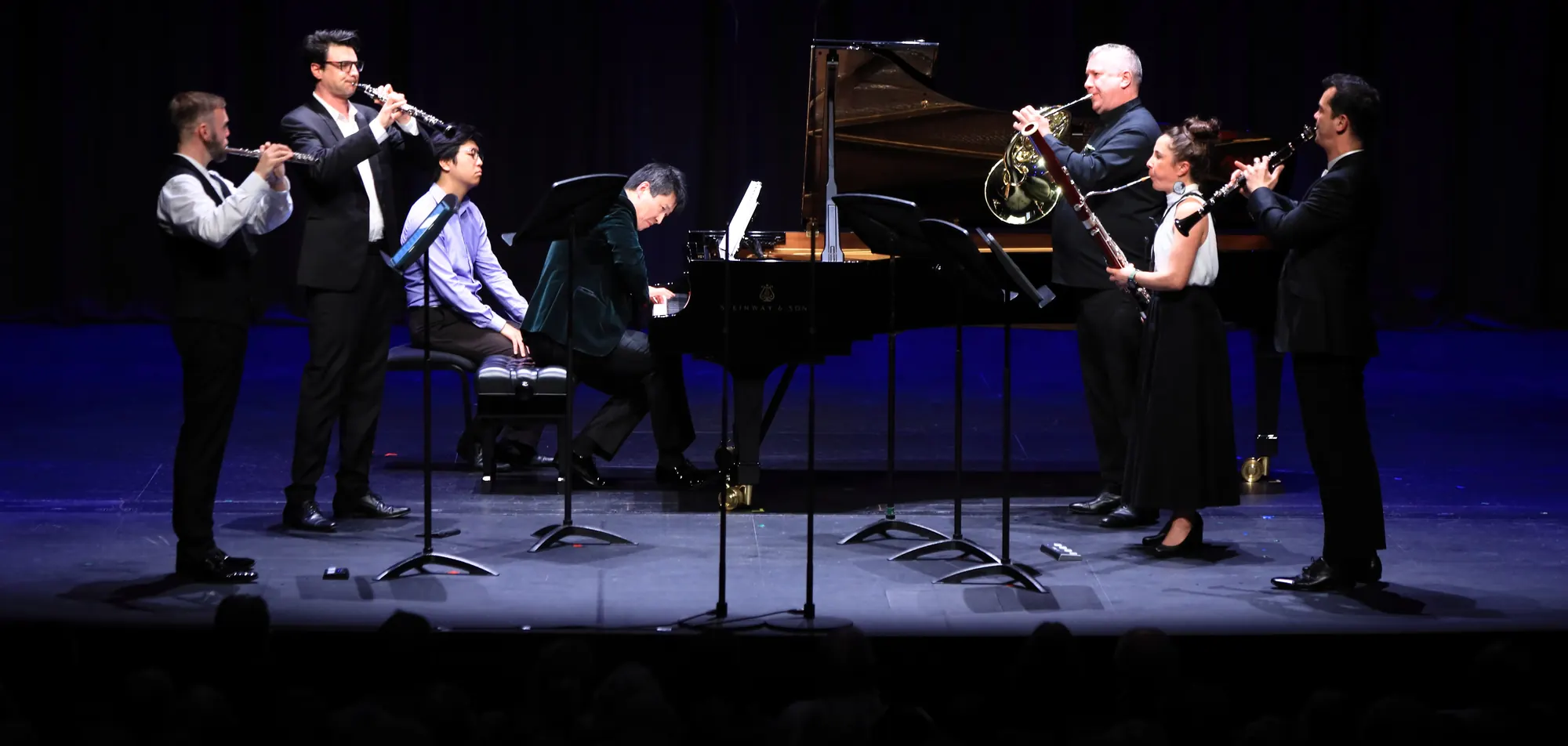
Larger groups, up to nine or ten players - still one to a part, still no conductor. AFCM 2026 closed its season with Poulenc's Sextet for flute, oboe, clarinet, bassoon, horn and piano (Joshua Batty, Emmanuel Cassimatis, Lloyd van't Hoff, Jackie Newcomb, Stefan Dohr and Kristian Chong), and featured Ferdinand Ries's Piano Sextet with Jack Liebeck, Alexandra Raikhlina, Benjamin Roskams, Charlotte Miles, Leon Bosch and Piers Lane AO. Go one further and you're at Mozart's Divertimento, nicknamed the "Nannerl Septet."
Voices as the instruments, from a few singers to VOCES8's eight - moving from Renaissance polyphony to pop.
The payoff
And then AFCM mixes them up
Half the magic of the Festival is hearing these building blocks recombined - artists mixed and matched into combinations that will never repeat, for one week each winter in Cairns-Gimuy.
See these shapes live, in Cairns-Gimuy
New to all this? Start with "What is chamber music?"
Good to know
How big can a chamber ensemble get before it's an orchestra?
Roughly nine or ten players. The line isn't exact, but the feel is: chamber music keeps one player to a part and no conductor - everyone's an equal voice.
Do these ensembles have a conductor?
No. They lead themselves, listening and cueing each other in real time - a big part of what makes them so good to watch.